Before collecting "room temperatures" from the rest of the lab groups in order to find an uncertainty, we had to convert our measured value into Kelvin from Fahrenheit.

At the beginning of the lab, we gathered measurements of room temperature from each lab group. We then used these values to find uncertainty of the "room temperature".

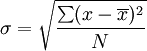
We used standard deviation to find this uncertainty. We initially used the differences between the average and individual measurements. Then we used the correct formula and used that uncertainty.

Below are the calculations used to find the final temp of the water when the water is mixed.
We used the known constant for the specific heat of water and the formula for heat exchange. We can clearly see that the heat of the system is equal to the heat of the surroundings. Also shown is the conversion for Joules to kilowatt hours. Also shown is the work required to use 1 Cal and move 1 kg a distance of 1 meter.

In the calculations below, an immersion heater was used to heat up 200mL of room temp water. If the immersion heater ran for 20s, the heat produced would be 5920J. We then used logger pro to create a graph depicting Heat in Joules vs Time in seconds. From this we gathered a slope. This slope represented the rate at which heat energy is changing compared to the temperature.

Because the slope represented the specific heat times the mass of the water, we were able to calculate the specific heat of water as shown below. Since the density of water is 1.0g/L, we were able to convert the 0.200mL into kg for the next calculations.

Since we only took measurements for a single trial,we needed to propagate for uncertainty.

Factors that contribute to the rate of cooling are as shown. Conductivity rate units and the formulas to find them for specific elements are displayed as well.

Conductivity causes a graph to become exponential. The heat equation still remains true for these types of problems as well. Here an aluminum can was dropped into hot water. The graph was exponential. Without knowing the specific heat of aluminum, we used the mass of the aluminum can, mass of the water, and the change in temperature to find the specific heat of aluminum.

The graph below shows hot water mixed with cold water until an equilibrium is reached. There is spike at the center on the graph because stirring the water to mix it caused a lot of movement in the system.

In this problem, we used the equation:

and solved for k.
K = conductivity. L = thickness. A= sectional area. Delta T= change in temp.
Since each side was made of different components, we had to separate them and solve for them individually.


Summary:
- Whenever there is a temperature difference between two objects in contact, heat energy will flow from the warmer objects to the cooler object until they reach the same temperature (equilibrium).
- Parts of any insulated system can be in thermal contact with each other without mixing. If these parts have different temperatures, they will interact until the entire system is at the same temperature.
- An interaction can occur without any exchange in matter.
- Heat energy of the system is equal to the heat of the surroundings.
- The slope of a Heat vs Time graph can help us calculate the specific heat of an unknown object being heated or cooled.
